
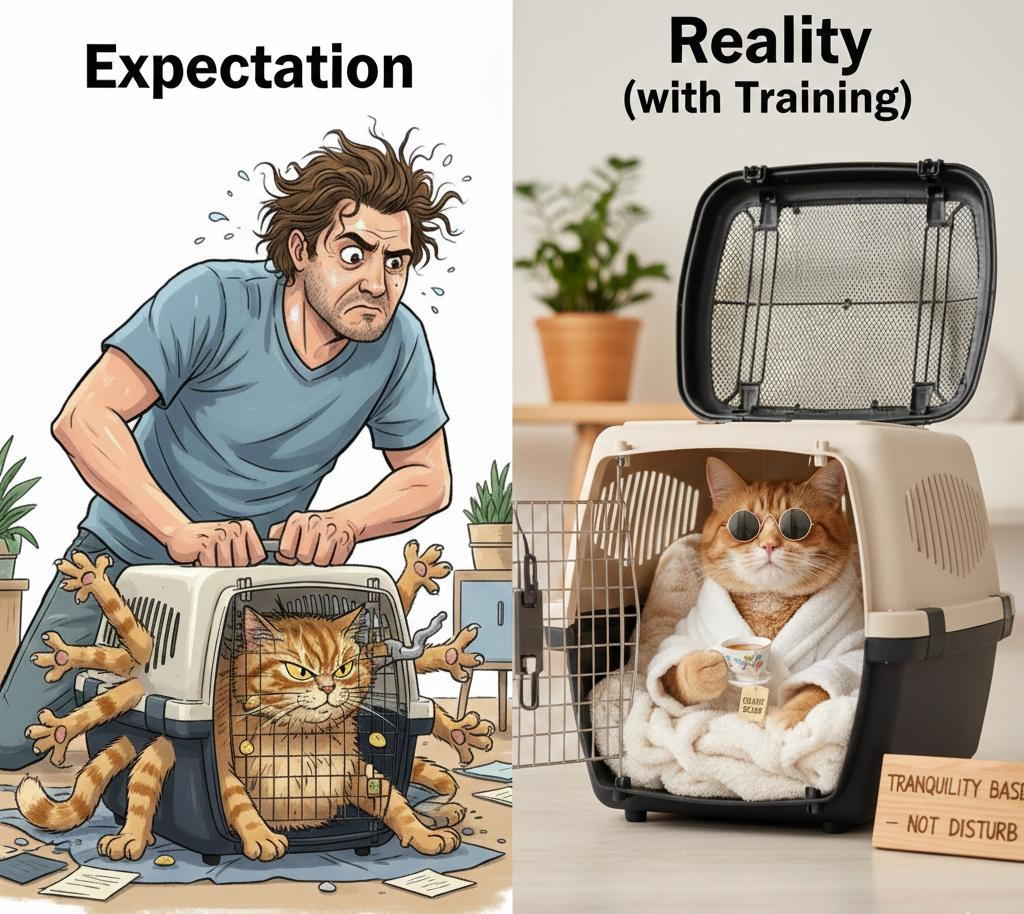
For many cat owners at Siena Animal Hospital, the hardest part of the vet visit isn't the exam—it’s actually getting the cat into the carrier. If your cat disappears the moment the plastic box comes out of the closet, you aren’t alone.
Helping your cat feel safe in their carrier is a vital part of fear-free feline care. When a cat is calm during transport, their vitals are more accurate, and their stress levels stay low during their check-up.
Here is our expert guide on turning that "scary box" into a cozy sanctuary.
1. Stop Hiding the Carrier
The biggest mistake owners make is keeping the carrier in the garage or attic, only bringing it out for vet trips. This teaches your cat that the carrier = a scary car ride.
The Fix: Leave the carrier out in a common area (like the living room) 365 days a year.
Pro Tip: Take the door off or prop it open so it feels like a permanent piece of furniture or a "cat condo."
2. Use Positive Reinforcement (and Treats!)
We want your cat to associate the carrier with "the good stuff."
The Fix: Start placing high-value treats, catnip, or their daily meals inside the carrier.
Pro Tip: If your cat is hesitant, start by placing the food bowl near the carrier and move it an inch closer every day until they are eating comfortably inside.
3. Comfort is Key
The hard plastic floor of a carrier is slippery and cold. A stable surface makes a cat feel much more secure.
The Fix: Line the carrier with a soft towel or a shirt that smells like you.
Pro Tip: Spray the bedding with Feliway (a synthetic feline pheromone) 15 minutes before travel. This sends "happy signals" to your cat’s brain that the area is safe.
4. Choose the Right Gear
If you are in the market for a new carrier, look for one that is top-loading or has a removable top.
Why? At Siena Animal Hospital, our doctors can often perform a significant portion of the exam while the cat stays nestled in the bottom half of their carrier. This allows them to feel "hidden" and protected while we check their heart and lungs.
5. Practice "Short Trips" to Nowhere
Once your cat is napping in their carrier at home, try closing the door for 30 seconds, then opening it and giving a treat. Gradually progress to carrying them around the house, then sitting in the car without the engine running.
Summary: A Stress-Free Cat is a Healthy Cat
By changing how your cat views their carrier, you are investing in their long-term health. Veterinary care is much more effective when your feline friend arrives calm and ready for their "spa day" with us.
Is your cat due for a wellness exam? [Contact Siena Animal Hospital today] to schedule your next fear-free visit!